
 US(USD)
How Racing Simulators Achieve "Zero Latency and Authentic Immersion"
- Mar.26, 2026 00:00:00
- 0 Comments
In the fields of esports racing and professional driving training, ultimate handling feel and immersive tactile experience are the core criteria for evaluating racing simulators. Achieving nearly imperceptible zero latency response and highly realistic car-like tactile feedback relies not merely on stacking hardware, but on the in-depth coordination of precision hardware and intelligent algorithms. This complete technical system brings virtual driving infinitely close to the real racing experience on the track.
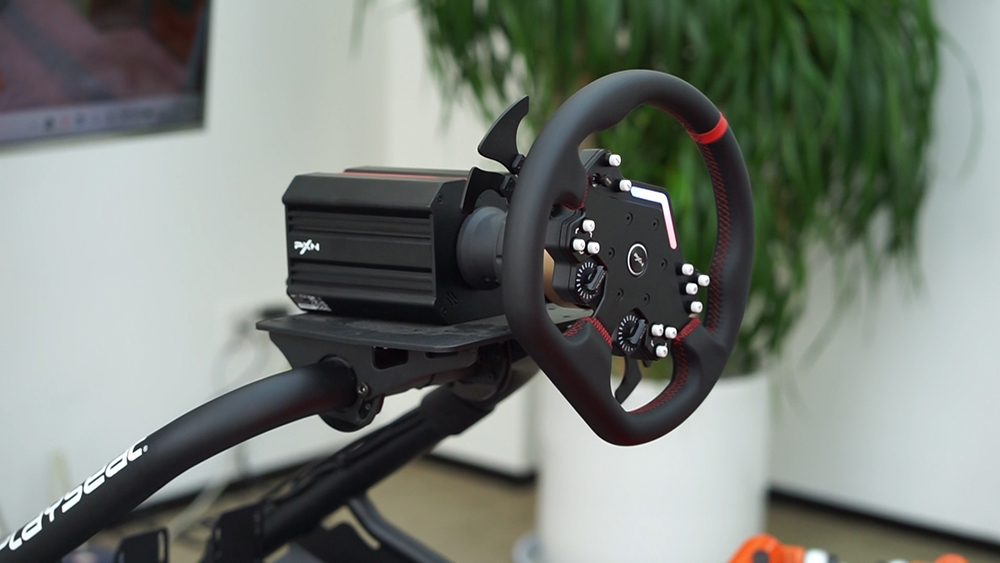
The realization of zero latency is firstly backed by high-performance hardware at the bottom level. The control terminal is equipped with a high-precision direct drive force feedback base, paired with a high-resolution magnetoelectric encoder, realizing millisecond-level angle recognition with smooth and accurate steering commands. The pedals adopt pressure-sensitive sensing components, which capture force signals instantly when stepped on, eliminating the signal lag of traditional peripherals. Meanwhile, high-speed transmission protocols replace ordinary communication methods, shortening the instruction transmission path and speeding up the upload of steering wheel and pedal operation signals. The overall delay from hand movement to equipment response is kept below the human perception threshold, ensuring instant and precise response to every operation.
Algorithmic optimization is also crucial to completely eliminate latency drawbacks. The system is equipped with a low-latency synchronization algorithm, which uniformly schedules multiple modules including control input, picture rendering, force feedback and sound output, ensuring precise clock synchronization of all components and avoiding the dislocation between visuals and tactile sensation. The pre-calculation algorithm predicts driving actions in advance and issues execution instructions ahead of time, further shortening the response time and eliminating lag. Whether it is a sharp steering turn or a light brake press, the simulator delivers instant feedback, fully in line with the handling response rhythm of a real racing car.
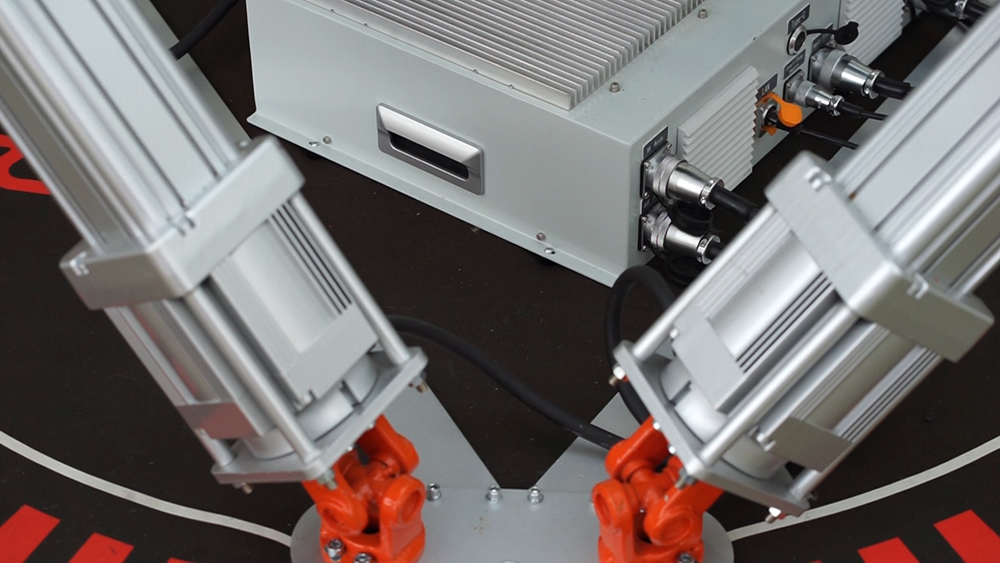
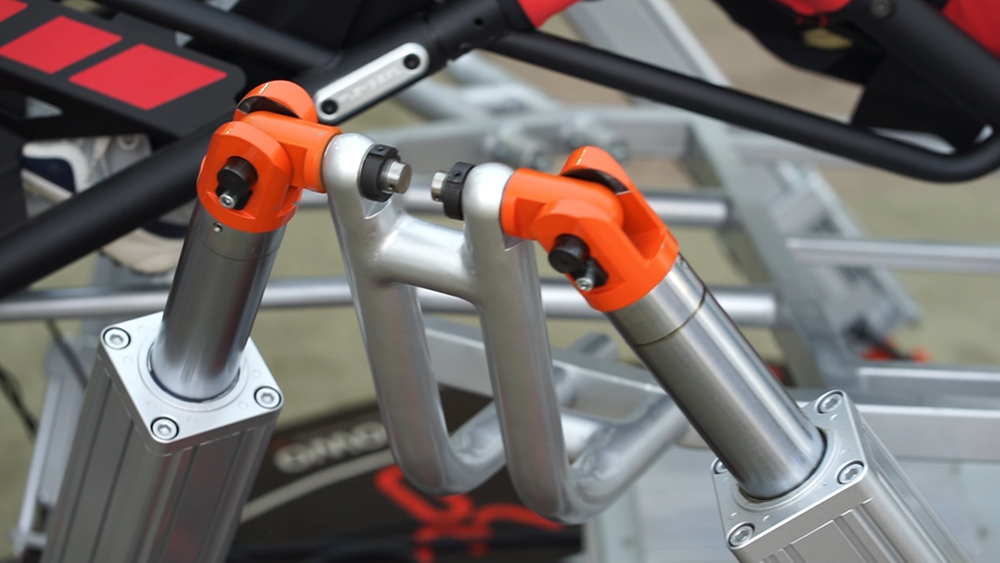
Restoring realistic tactile sensation depends on the joint efforts of high-quality hardware and refined algorithm tuning. On the hardware side, a professional dynamic platform cooperates with multi-axis servo motors to accurately simulate body postures such as backward leaning during acceleration, forward leaning under braking, and body leaning when turning, and delicately transmit subtle feedback like road shoulder bumps, tire skidding and engine vibration. The exclusive steering wheel and damping pedals replicate the steering resistance and brake feel of real cars, restoring real tactile sensations such as ABS intervention and gear shifting impact.
At the algorithm level, professional vehicle dynamics algorithms and tactile fitting algorithms endow the hardware with authentic "vitality". The algorithms are embedded with real vehicle physical data, accurately simulating dynamics characteristics such as body center of gravity shift, tire grip change and suspension compression and rebound, making every turn and brake comply with real physical laws. Meanwhile, the intelligent tactile algorithm dynamically adjusts the feedback strength, distinguishing the tactile differences of different road conditions such as asphalt roads and gravel roads, filtering out false and rigid vibrations, retaining real and delicate road feel, avoiding tactile distortion and making drivers feel immersive.
From the sophisticated manufacturing of hardware to the in-depth optimization of algorithms, racing simulators have overcome the two core problems of latency and tactile sensation through full-chain technical refinement. This extreme simulation experience not only meets the professional competitive needs of esports events, but also becomes a powerful tool for driving training and automotive enterprise R&D. Amid the integration of racing esports and automotive technology, it continues to consolidate the core competitiveness of professional simulation equipment.