
 US(USD)
Six-Axis Racing Simulator: When the Racing Dream Meets Reality
- Sep.18, 2026 12:00:00
- 0 Comments
Deep in the heart of everyone who loves driving lives a racing driver. The roar of the engine, the scream of the tires, the pressure of centrifugal force pinning you into your seat through a corner—these experiences, once reserved for professional racers, are now being brought into the lives of ordinary people by six-axis racing simulators.
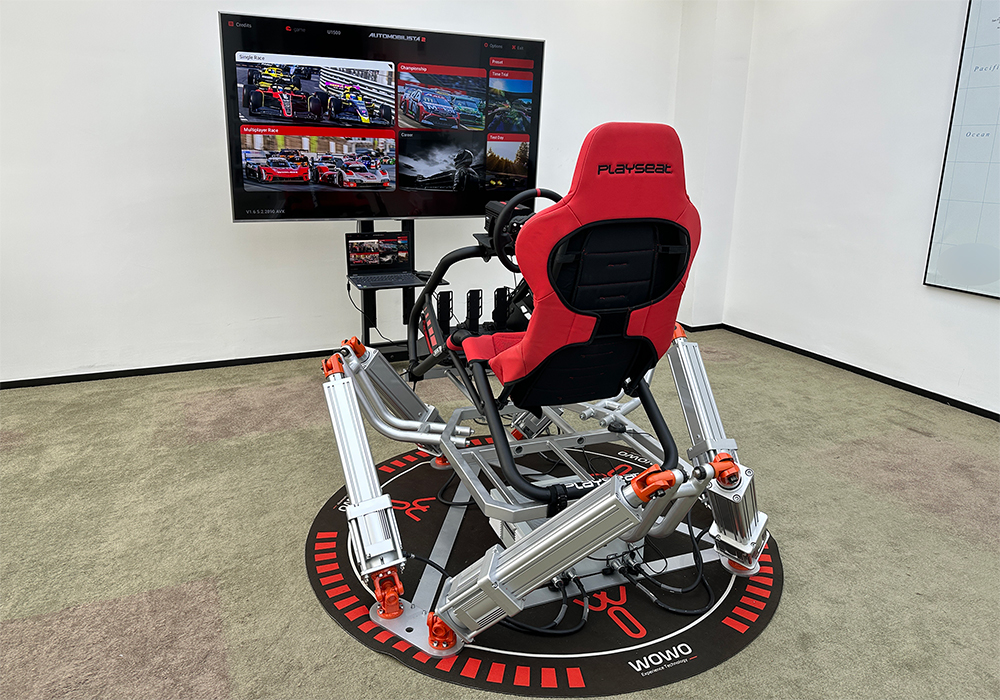
A six-axis racing simulator, as the name suggests, is a motion platform driven by six electric (or pneumatic) actuators. Unlike traditional static simulators, it can precisely reproduce a vehicle's motion in all six degrees of freedom in three-dimensional space: surge, sway, and heave (forward/backward, left/right, and up/down translation), as well as pitch, roll, and yaw rotation. When you drive a virtual race car into a corner, the platform tilts instantly, letting you truly feel the lateral acceleration caused by body roll. When you clip an apex or run over a curb, the seat transmits fine vibrations. When you brake hard into a turn, your body leans forward involuntarily—and all of this happens with millisecond-level response.
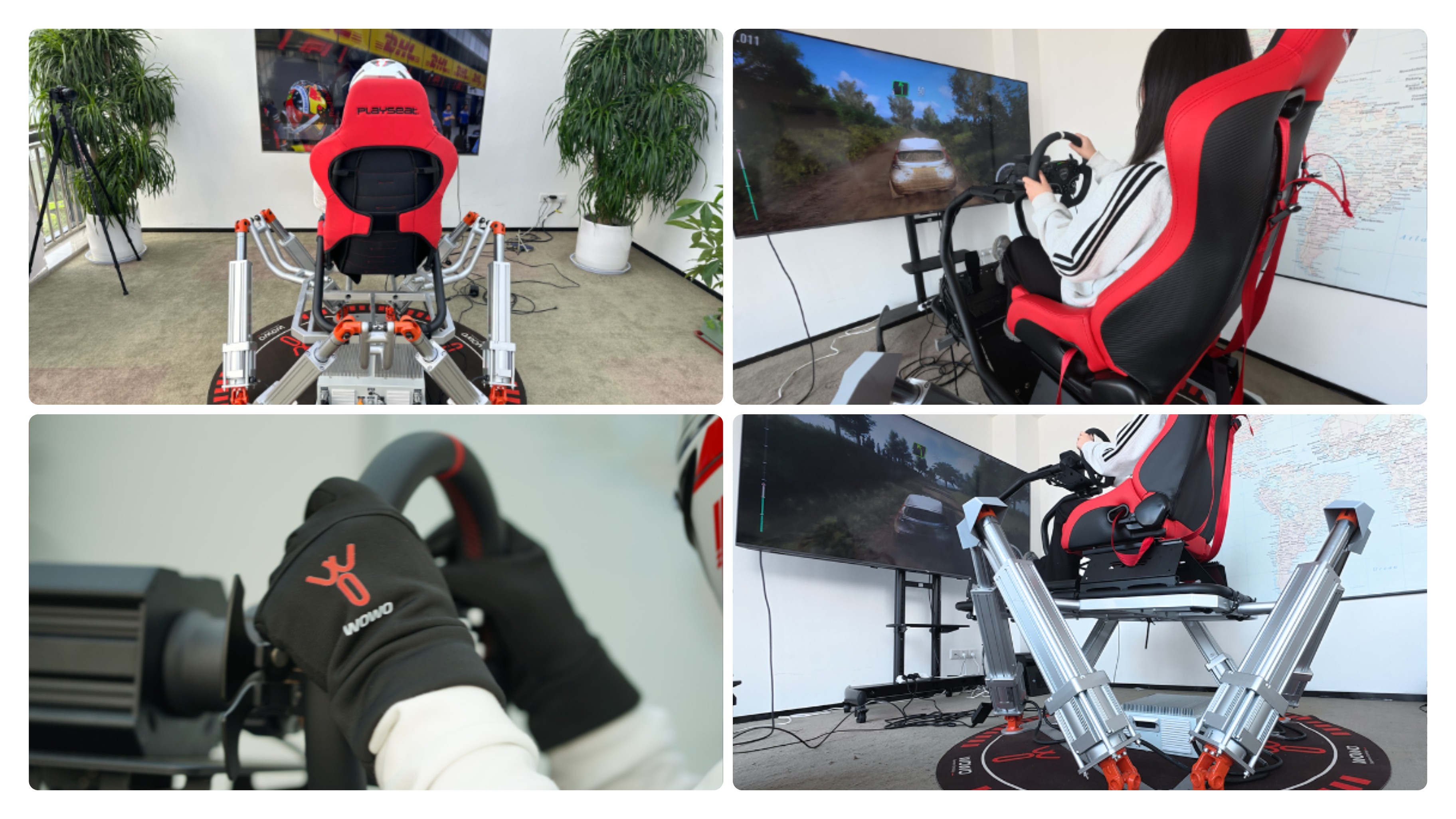
Its core appeal lies in a qualitative leap in "immersion." Static simulators can only convey information through visuals and steering wheel force feedback, but a six-axis platform turns the body itself into a sensor. Your vestibular system, muscles, and joints all tell you: you are driving, not merely playing a game. This physical feedback is especially important for racing training—professional drivers can use it to repeatedly refine their racing lines, braking points, and weight-transfer techniques without bearing the high costs and risks of a real track.
Of course, six-axis simulators also face challenges. Their high cost, demands on space and power, and the complexity of tuning motion algorithms mean they currently remain mainly in professional esports teams, racing clubs, and high-end experience centers. But technological progress never stops. As the cost of domestic servo systems declines, equipment that once cost millions is gradually moving toward civilian use.
Perhaps before long, six-axis racing simulators will become standard equipment for hardcore players, just like today's VR headsets. By then, everyone harboring a racing dream will be able to hear that purest roar of the engine—right in their own room.