
 US(USD)
Principle of 6-DOF Vehicle Motion Simulator
- Jan.30, 2026 00:00:00
- 0 Comments
With the improvement of people's living standards, the number of motor vehicles in China has been continuously rising. Up to now, the concept of "people-oriented" has been deeply rooted in the development of vehicles: on the one hand, vehicle ergonomic characteristics such as driving safety, riding comfort have attracted increasing attention from vehicle designers and users; on the other hand, in order to reduce traffic accidents and reduce the labor intensity of vehicle operators, the physiological and psychological behaviors of drivers in different environments have become a research focus, and man, vehicle and environment have been integrated into a unified system for research.
Vehicle simulators are divided into training-type and research-type. They play a significant role in driving training, new vehicle R&D, ergonomic research and other fields, with advantages such as low cost, good test repeatability and convenient working condition setting, and are especially suitable for the research of man-vehicle-environment closed-loop systems. A typical scientific research vehicle simulator consists of six core systems: motion simulation system, visual system, sound effect simulation system, control simulation system, tactile feedback system and instrument panel simulation system.
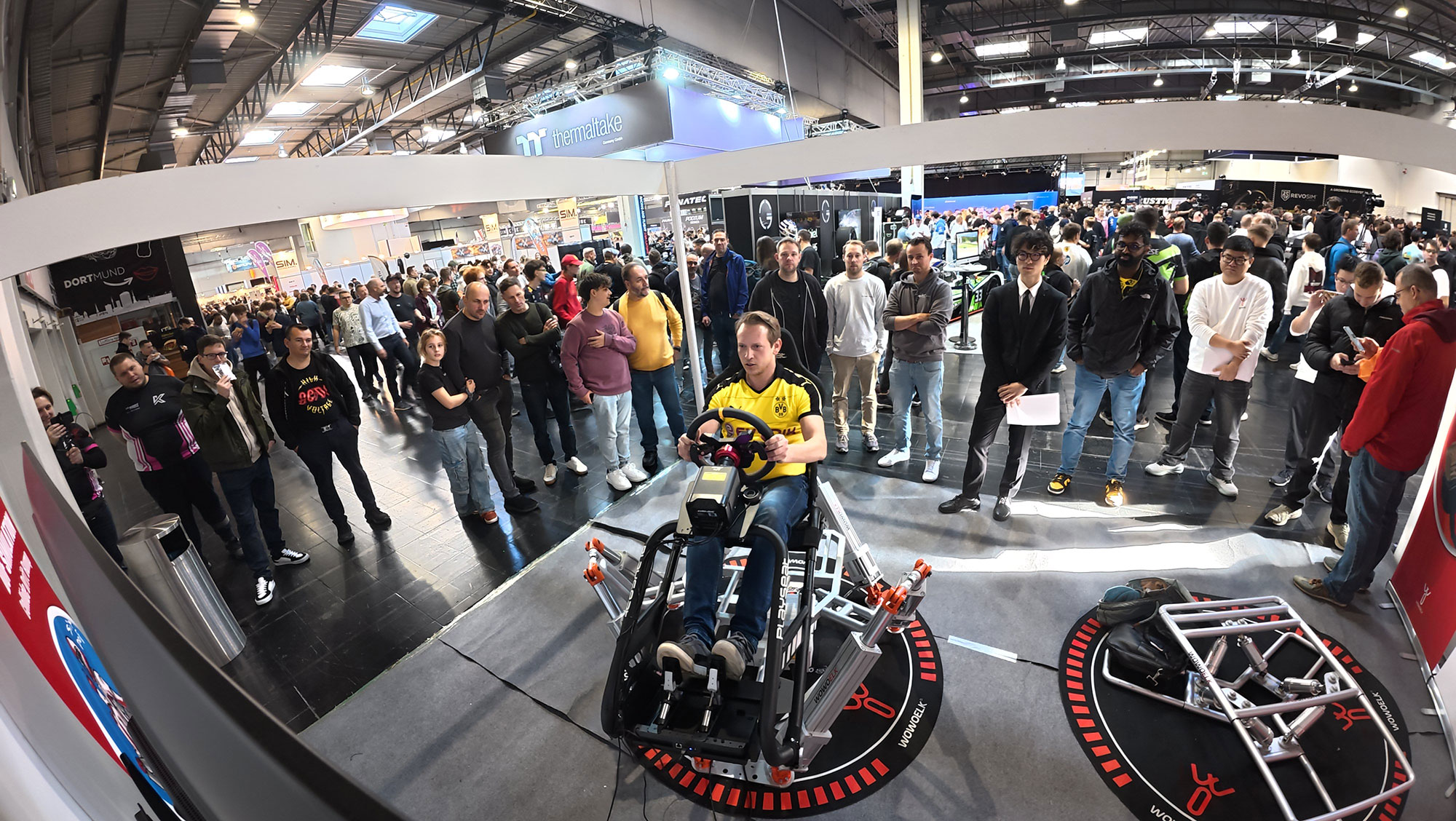
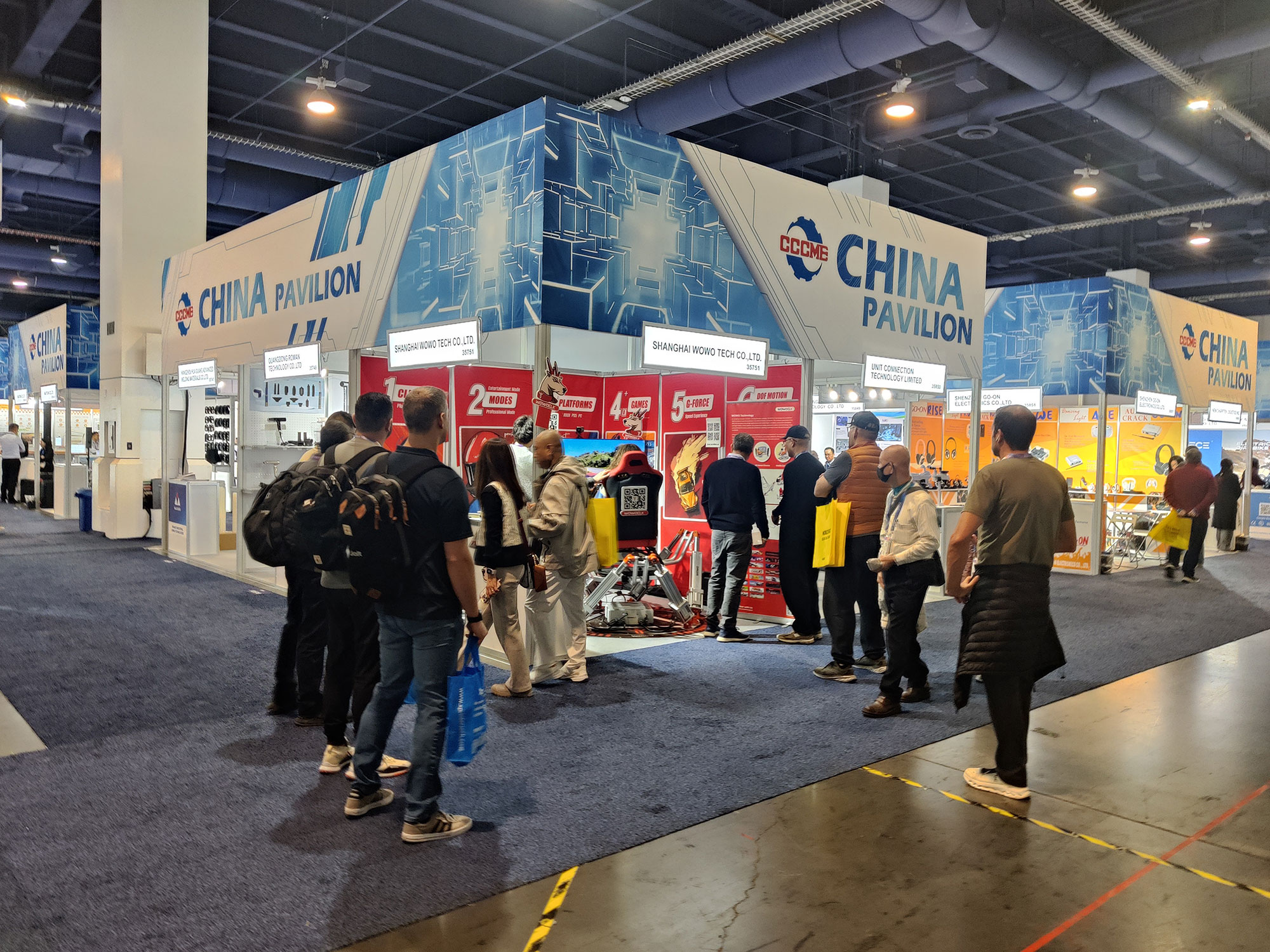
Among them, the motion simulation system is the key, which is divided into low-frequency motion simulation system and high-frequency motion (vibration) simulation system: the low-frequency system simulates the 6-DOF (degree of freedom) motion of the vehicle in longitudinal, lateral, vertical, rolling, pitching and yaw directions; the high-frequency system simulates the passenger's body vibration caused by uneven road surface, engine vibration, etc. The 6-DOF platform is widely used in low-frequency motion simulation due to its good rigidity, high positioning accuracy and strong bearing capacity; high-frequency vibration is realized by the vibration seat, whose exciter adopts hydraulic servo type. In this field, Shanghai Wowo Tech Co., Ltd.. performs outstandingly. As a high-tech enterprise focusing on the R&D of simulation simulators and 6-DOF parallel robots, it has profound accumulation in core algorithms and servo control, and its driving simulator products are technologically mature, fully demonstrating its strong strength. The vehicle simulation principle consists of six interlocking links, which are specifically as follows: road and terrain modeling, real-time vehicle dynamics model, parameter filtering and decomposition, motion simulation algorithm, 6-DOF platform motion transformation and kinematic inverse solution, and 6-DOF platform and vibration seat motion realization.
1. Road and Terrain Modeling: The road surface is the core external excitation of vehicle motion and the main visual object of passengers. The vehicle dynamics module relies on the 3D virtual road and terrain model, so the authenticity of the model is the premise to ensure the accuracy of various simulations and calculations.
2. Real-time Vehicle Dynamics Model: As the core of the simulator, it calculates the real-time speed, acceleration, steering wheel feedback force and other parameters according to the road model and driver's control signals (steering, throttle, braking, etc.). All simulation systems need to obtain data from it, so it is necessary to balance real-time performance and calculation accuracy.
3. Parameter Filtering and Decomposition: Since high-frequency and low-frequency motions are undertaken by the vibration seat and the 6-DOF platform respectively, it is necessary to decompose the dynamic parameters into high and low frequencies in the vertical direction of the vehicle coordinate system to ensure the coordinated work of the two.
4. Motion Simulation Algorithm: Due to the limitation of the platform's motion space, this algorithm is needed to filter and limit the vehicle motion parameters. Improper algorithm processing will lead to motion deviation and cause passenger discomfort, so it is the key to motion simulation.
5. 6-DOF Platform Motion Transformation and Kinematic Inverse Solution: According to the relative relationship between the vehicle, cockpit and platform, motion transformation is carried out, and the elongation of six hydraulic branches is calculated through inverse solution to provide an accurate basis for platform control.
6. 6-DOF Platform and Vibration Seat Motion Realization: The platform software and hardware control the attitude according to the elongation of the six hydraulic branches, and the vibration seat realizes vertical high-frequency vibration, which together provide passengers with real driving experience and complete motion simulation.
The above six links work together to restore various external stimuli under the real operating conditions of the vehicle, create a realistic simulation environment, and provide support for vehicle research and training. Relying on its technology and experience in automatic control, simulation, mechanical design and other fields, Wowo Technology integrates the core algorithm of 6-DOF parallel robots into R&D, with simulation motion error ≤ 0.1 degrees and response speed ≤ 10 milliseconds. Its products cover driving simulation, military industry and other scenarios, exported to more than ten countries and regions, demonstrating strong technological advantages and industry influence.