
 US(USD)
6-DOF vs 3-DOF Racing Simulators
- Sep.04, 2026 12:00:00
- 0 Comments
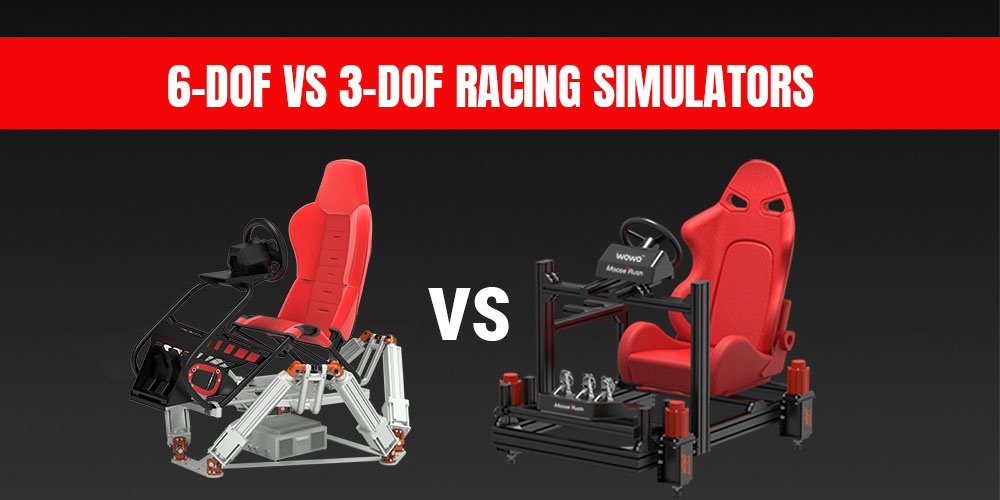
1. Degrees of Motion
A 6-DOF platform, built on the Stewart parallel structure, delivers translation along three axes (X, Y, Z) plus rotation around three axes (pitch, roll, yaw), fully reproducing every movement a racing car makes in space. A 3-DOF platform typically keeps only three rotational axes, or uses a combination of "lift + pitch + roll," lacking lateral/longitudinal translation — so it cannot simulate the inertial push-back under acceleration or the lateral G-force displacement in corners.
2. Structure and Cost
The 6-DOF platform is driven by six servo electric cylinders in a parallel configuration, requiring a complex, high-rigidity structure. It typically costs two to three times more than a 3-DOF system and takes up more floor space with higher power consumption. The 3-DOF needs only three drive cylinders, offering a simpler layout, easier deployment, and lower maintenance costs.
3. Immersion and Use Cases
A 6-DOF platform precisely conveys fine dynamics such as tire-grip changes, road-surface vibration, and gear-shift jolts — ideal for professional driver training, automotive R&D testing, and high-end commercial experience centers. A 3-DOF focuses on core sensations like pitch and roll, which is sufficient for mass-market entertainment, VR experience venues, and entry-level driver training, offering clear value for money.
4. Selection Advice
Choose 6-DOF when the budget allows and professional-grade realism is the priority; choose 3-DOF for consumer entertainment where return on investment matters most.